

Ways to live
Life closer to the coast.
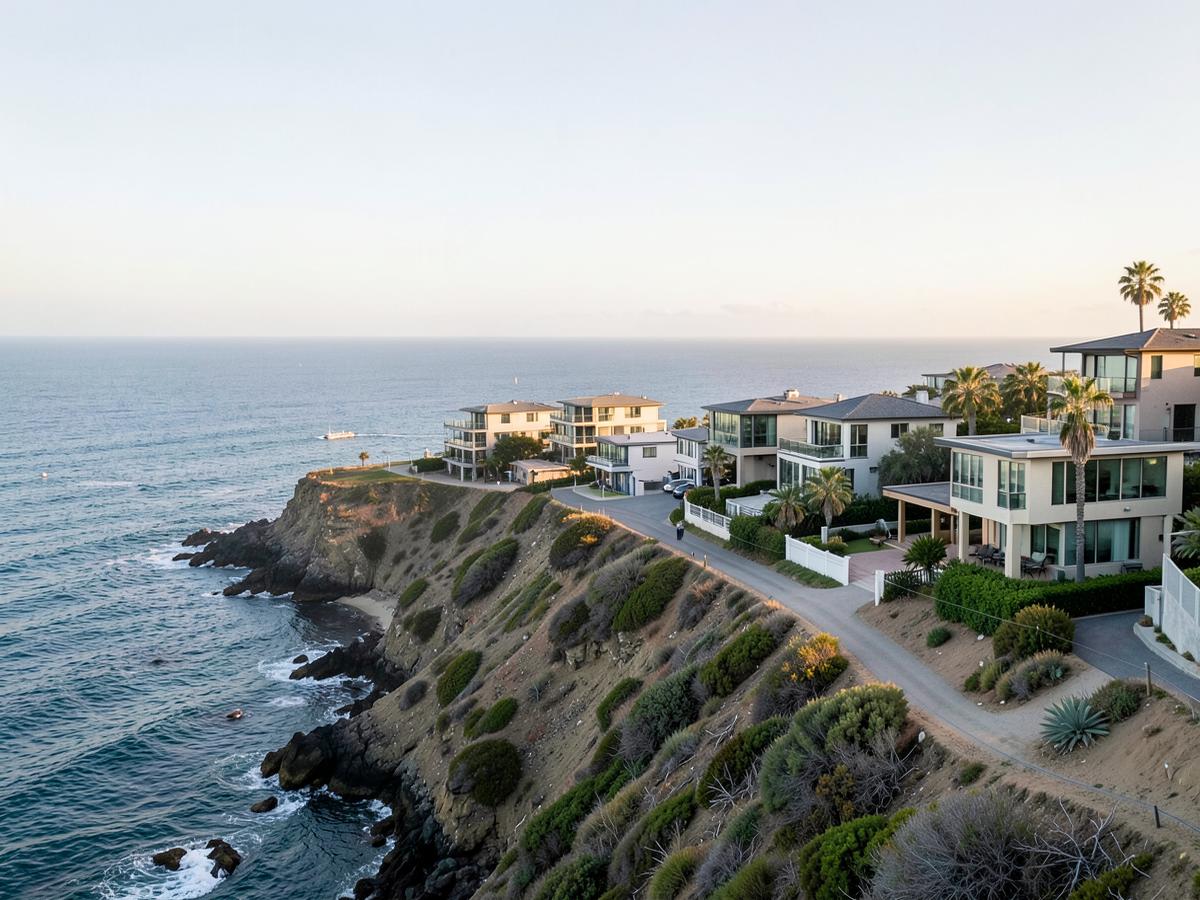
What this actually means
San Diego County's coastline runs roughly seventy miles, and the communities along it differ from one another as much as they differ from inland areas. Some are walkable village centers; others are quiet residential streets where most trips are drives.
Proximity to the coast is measured in blocks, and what changes across those blocks is substantial: price, housing type, parking, noise, traffic in summer, and how often you actually reach the water. Being in a coastal city does not by itself mean views, ocean breezes, or walking distance to the beach — those vary property by property.
What to think about
The things worth checking
- Proximity versus direct coastal location
- Distance to the shoreline changes the character and cost of a property considerably. It is worth deciding whether you want to be at the water or near it, because the two shop very differently.
- Attached versus detached
- Closer to the coast, more of the housing stock tends to be attached or on smaller lots. Further back, detached homes with more land become more common.
- Parking
- Garage space, driveway space and street parking vary widely near the coast, and some older properties have less of it than their size suggests. Worth checking specifically.
- Outdoor space
- Yards, patios and decks differ substantially between coastal properties. Some trade lot size for location.
- HOA considerations
- Many coastal properties belong to an association. Dues, what they cover and any restrictions differ by community — read the governing documents for the specific property.
- The marine environment
- Salt air affects exterior materials, fixtures and mechanical equipment over time. Maintenance expectations near the water are not the same as inland.
- Insurance
- Coverage, cost and availability depend on the property and its location. Talk with an insurance professional early, because it can take time to arrange.
- Commute and seasonal traffic
- Coastal corridors carry visitor traffic that changes by season and time of day. Driving the route you would actually drive, at the time you would drive it, is the reliable test.
Tradeoffs
What you give up for what.
Every way of living asks for something in return. Knowing which trade you are making is more useful than pretending there isn't one.
- Getting closer to the water usually means paying more per square foot, having less land, or both.
- The most walkable coastal pockets are often the busiest in summer.
- Lower-maintenance attached homes near the coast come with association rules and dues.
- A quieter coastal street may be further from shops and require driving for daily errands.
What to talk through with Ardra
Worth a conversation.
- How close to the water you actually want to be, in blocks rather than in principle
- Whether you would trade land for location, or the reverse
- Which coastal communities fit your commute
- What maintenance you are willing to take on near the water
Where to explore next
- New ConstructionStart with something new.
- Single-Family HomesMore space to make your own.
- Condos & TownhomesA different approach to homeownership.
- Distinctive HomesHomes with something exceptional about them.
- Investment OpportunitiesLook at the property — and the numbers.
Still deciding on an area? San Diego Fit works through it question by question.